
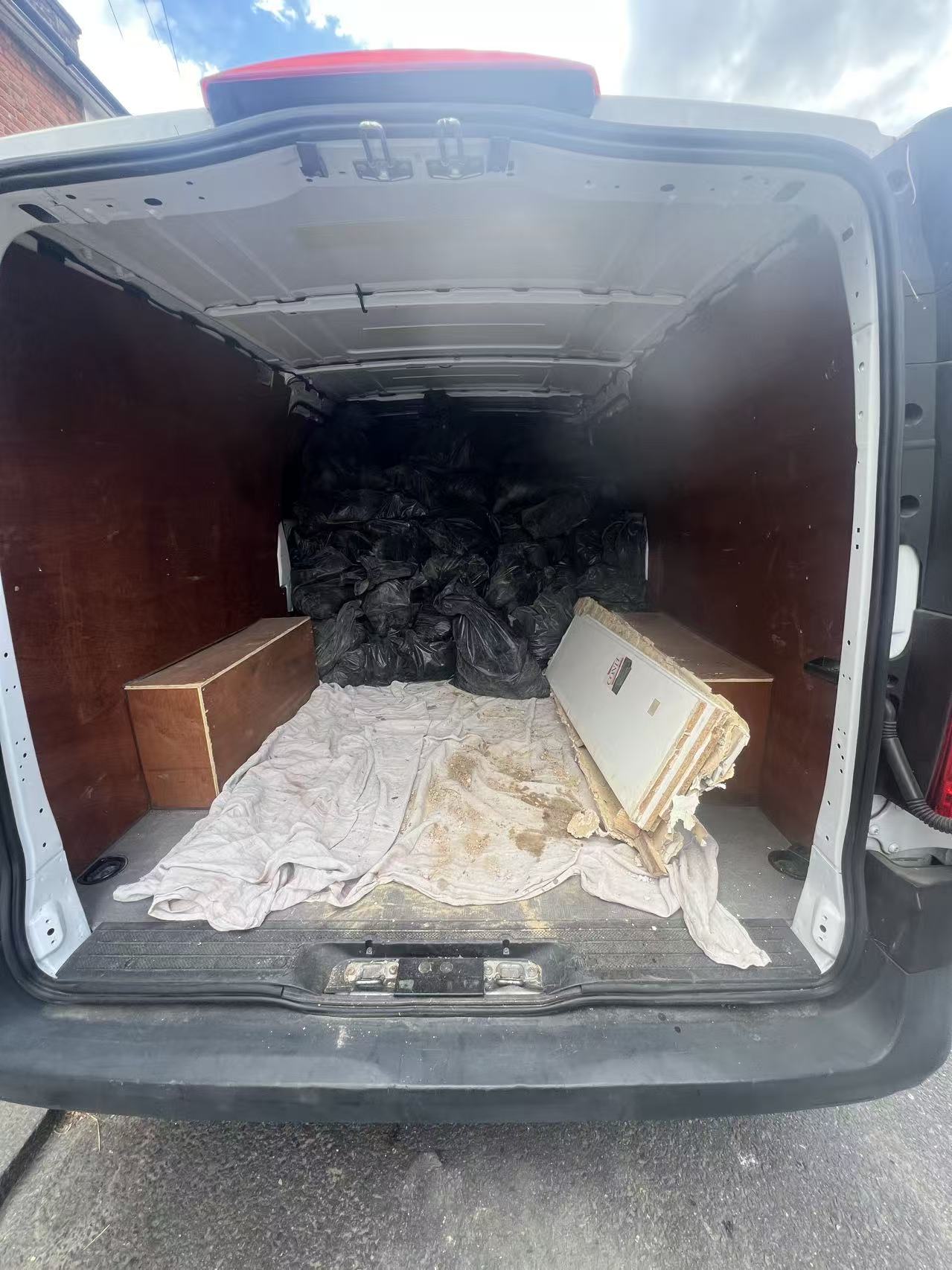
Anyone who has carried out a renovation, extension or commercial fit-out in the UK will probably have noticed one thing very quickly: getting rid of construction waste can be surprisingly expensive.
A few bags of household rubbish may cost almost nothing to dispose of, but once bricks, plasterboard, timber, tiles, soil and demolition waste start piling up on a building site, waste removal can easily become a significant part of the project budget.
So why does builders' waste cost so much to dispose of in the UK, particularly in London? And more importantly, what can homeowners and contractors do to keep these costs under control?
How Much Does Construction Waste Disposal Cost?
There is no single price because the cost depends on the type of waste, its weight, the location of the project and the disposal method.
As a rough guide, a typical 6–8 yard builder's skip in the UK can cost several hundred pounds. In London, the same skip will often be considerably more expensive.
In 2026, a typical builder's skip in London can cost approximately £265–£530, depending on size, location and waste type.
If the skip needs to be placed on a public road rather than private land, additional council permits and sometimes parking-bay suspension charges may also apply.
For a large renovation or refurbishment requiring several skips, waste disposal can therefore quickly run into thousands of pounds.
Why Is Waste Disposal So Expensive in the UK?
1. Construction Waste Is Heavy
Many building materials are extremely dense.
Bricks, blocks, concrete, tiles, soil and rubble may not take up much physical space, but they can weigh several tonnes.
Waste disposal facilities often charge according to weight as well as volume, meaning a skip containing rubble can be much more expensive to process than one containing lightweight packaging or timber.
This is also why many skip companies restrict how much soil, concrete or hardcore can be placed in larger skips.
2. Waste Has to Be Processed Properly
A skip does not simply disappear after it leaves the building site.
The waste normally has to be transported to an authorised waste facility, where different materials may be sorted, processed, recycled or transferred for further treatment.
Materials such as:
-
timber
-
metal
-
plasterboard
-
concrete
-
bricks
-
soil
-
plastics
-
cardboard
may all require different processing routes.
The more mixed the waste becomes, the more difficult and expensive it can be to separate.
3. London Adds Another Layer of Cost
Waste removal is particularly expensive in London.
Waste companies have to deal with higher labour costs, traffic congestion, restricted access, parking restrictions and higher operating costs.
On many London projects there is also nowhere to leave a skip on private land.
If a skip has to sit on the road, the contractor may need a highway permit and, depending on the borough and location, a suspended parking bay.
For smaller sites, these additional charges can represent a surprisingly large percentage of the total disposal cost.
4. Commercial Waste Is Different From Household Waste
One of the biggest misunderstandings we regularly see is the assumption that construction waste can simply be taken to a local household recycling centre.
Waste generated as part of a commercial building activity is normally classified as business or commercial waste.
Builders and contractors therefore have legal responsibilities regarding how that waste is stored, transported and disposed of.
A contractor regularly transporting construction waste must use the appropriate authorised waste disposal route and comply with waste-carrier requirements.
This is one reason why a legitimate building contractor's waste-removal cost can look considerably higher than simply putting rubbish into a van and taking it away.
5. Some Materials Cost More Than Others
Not all construction waste costs the same amount to dispose of.
Clean bricks, concrete and hardcore can often be recycled relatively efficiently.
Mixed construction waste is normally more expensive because it requires sorting.
Other materials may require specialist disposal.
Examples include:
-
asbestos-containing materials
-
contaminated soil
-
chemicals and solvents
-
certain insulation products
-
electrical equipment
-
paint and hazardous liquids
These materials should never simply be mixed into an ordinary builders' skip.
So How Can You Reduce Construction Waste Costs?
Fortunately, there are several practical ways to reduce the cost.
1. Separate Waste on Site
One of the simplest strategies is to avoid mixing everything together.
Where the project has enough space, separate materials such as:
Clean rubble and hardcore
Bricks, concrete and blocks can often be recycled into crushed aggregate.
Metal
Copper, steel, aluminium and other metals may have recycling value rather than disposal cost.
Timber
Clean timber can often be processed separately from mixed construction waste.
Cardboard and packaging
These materials occupy a lot of skip space while weighing very little.
Keeping them separate can prevent an expensive builders' skip from filling up unnecessarily.
2. Do Not Pay to Throw Away Air
This sounds obvious, but poorly loaded skips waste a huge amount of space.
Large cardboard boxes, dismantled furniture, kitchen units and timber frames can contain significant empty space.
Flatten cardboard.
Break down cabinets.
Cut timber into manageable lengths.
Stack flat materials carefully.
A properly loaded skip can sometimes hold substantially more material than a badly loaded one.
On a large refurbishment, better loading alone can mean needing one fewer skip.
That can save hundreds of pounds.
3. Use the Right Disposal Method
A skip is not always the cheapest option.
For projects producing waste gradually over several days or weeks, a skip can be extremely convenient.
However, if the waste is already piled up and accessible, a grab lorry or licensed waste-removal vehicle may sometimes be more economical.
For excavation work producing large quantities of soil or hardcore, grab-lorry collection can be particularly efficient.
For very small refurbishments, a licensed man-and-van waste collection may cost less than hiring a full skip.
The cheapest solution depends on the quantity, weight and type of material.
4. Plan Waste Before Starting the Project
Waste should be considered when preparing the construction programme, not after demolition begins.
Before starting a refurbishment, estimate approximately how much material will be removed.
For example:
A bathroom refurbishment may produce tiles, plasterboard, sanitary ware and packaging.
A kitchen refurbishment may produce cabinets, worktops, appliances and floor finishes.
A structural alteration may produce large quantities of bricks, concrete and plaster.
Planning these materials in advance makes it much easier to choose the correct waste-removal method.
5. Reuse Materials Where Practical
Not everything removed from a building needs to become waste.
Depending on condition, materials such as:
-
bricks
-
paving slabs
-
timber
-
doors
-
sanitary ware
-
kitchen units
-
roof tiles
may sometimes be reused either on the same project or elsewhere.
Reusing materials reduces both disposal costs and the cost of purchasing replacement materials.
6. Order Materials More Carefully
Waste disposal starts long before demolition.
Over-ordering plasterboard, timber, insulation, tiles and other materials means paying twice:
First to buy the material.
Then again to throw it away.
Good quantity surveying and material planning can therefore reduce both purchasing costs and waste costs.
7. Use a Properly Registered Waste Carrier
A very cheap waste-removal quote is not always a bargain.
Businesses transporting waste must comply with waste-carrier rules, and construction companies have a duty to ensure their waste is transferred to an authorised person or facility.
Using an unregistered operator can create serious problems if the waste is later fly-tipped.
For professional projects, always use a legitimate waste carrier and retain the relevant waste-transfer documentation.
Waste Management Is Part of Good Construction Management
Waste disposal is often treated as a small miscellaneous cost when preparing a building quotation.
In reality, on a large renovation or commercial refurbishment it can become a significant cost.
The most efficient approach is not simply to search for the cheapest skip.
Good waste management means:
planning demolition carefully, separating recyclable materials, choosing the correct collection method, loading waste efficiently and using authorised disposal companies.
At Canghai Construction Ltd, we consider waste management as part of the overall construction programme rather than an afterthought.
This helps us keep sites organised, reduce unnecessary disposal costs and ensure construction waste is handled responsibly throughout the project.
Planning a Renovation or Commercial Fit-Out?
If you are planning a house renovation, extension, restaurant fit-out or commercial refurbishment in London or elsewhere in the UK, waste removal should be included in the project budget from the beginning.
Careful planning can often reduce both the number of collections required and the overall construction cost.
Contact Canghai Construction Ltd to discuss your project and receive a detailed quotation.