
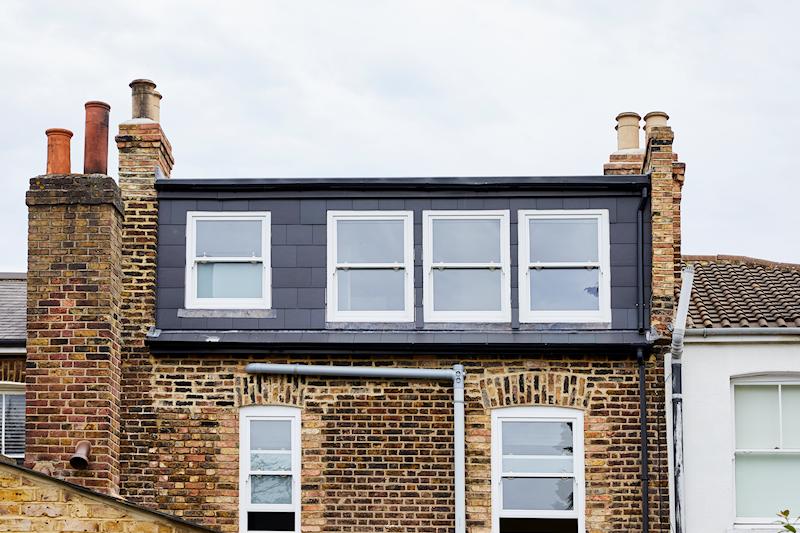
Loft Conversions in London: Key Considerations for a Successful Project
## Introduction
Loft conversions are one of the most efficient ways to add usable space and increase property value in London. With high land costs and strict planning constraints, extending upward is often more practical than extending outward.
However, a successful loft conversion requires careful coordination of structural design, planning regulations, thermal performance, and construction logistics—especially in London’s dense urban environment.
This guide outlines the key technical and practical considerations to ensure your project is both compliant and cost-effective.
---
## 1. Planning Permission & Permitted Development
Not all loft conversions require full planning permission. Many fall under **Permitted Development (PD)**, but strict criteria apply:
* Maximum volume increase:
* 40m³ for terraced houses
* 50m³ for semi-detached and detached homes
* No extension beyond the plane of the existing roof slope (front elevation)
* Materials must be similar in appearance to the existing house
* Side-facing windows must be obscure-glazed
⚠️ **Important:**
Flats, maisonettes, and properties in conservation areas typically require full planning approval.
---
## 2. Structural Design & Load Considerations
Most existing lofts are not designed to carry habitable loads. Structural upgrades are almost always required:
* Installation of **steel beams (RSJs/UCs/UBs)** to support new floor loads
* Strengthening or replacing ceiling joists with structural floor joists
* Redistribution of loads to load-bearing walls
* Consideration of point loads on existing foundations
In London terraces, coordination with **party walls** is critical (see next section).
---
## 3. Party Wall Agreements
If your property shares walls with neighbours, the **Party Wall Act 1996** applies.
Typical triggers:
* Cutting into a party wall for steel beam installation
* Raising the party wall for dormers or mansards
* Excavation near neighbouring foundations
You will need:
* Formal notice to neighbours
* Party wall surveyor(s) if disputes arise
Failure to comply can delay projects significantly.
---
## 4. Staircase Design & Access
Access is one of the most constrained aspects of a loft conversion.
Key requirements:
* Minimum head height: **~2.0m (where possible)**
* Fixed staircase (not ladders for habitable rooms)
* Fire-safe escape route
Design challenges often include:
* Loss of space on the floor below
* Navigating existing layouts without major reconfiguration
---
## 5. Fire Safety & Building Regulations
Compliance with UK Building Regulations (Approved Document B) is mandatory:
* Fire-resistant doors (FD30) along escape routes
* Mains-powered, interlinked smoke alarms
* Protected stair enclosure
* Escape windows (where applicable)
For 3-storey homes post-conversion, fire strategy becomes significantly more complex.
---
## 6. Thermal Performance & Insulation
Roof insulation must meet strict U-value requirements while managing condensation risk.
Common approaches:
### Warm Roof (Preferred)
* Insulation above rafters
* Continuous thermal layer
* Minimises cold bridges
### Cold Roof (More constrained)
* Insulation between and below rafters
* Requires ventilation gaps
Additional considerations:
* Airtightness membranes
* Vapour control layers
* Breathable construction for older buildings
---
## 7. Roof Type & Conversion Options
Different roof types affect feasibility and cost:
* **Dormer Conversion**
Most common; adds headroom and floor area
* **Mansard Conversion**
Maximises space but requires planning permission
* **Hip-to-Gable Conversion**
Suitable for semi-detached/end-of-terrace homes
* **Rooflight (Velux) Conversion**
Least invasive but limited space gain
---
## 8. Services Integration (Electrical, Plumbing, Ventilation)
Key coordination points:
* Routing cables without excessive structural drilling
* Integrating heating (radiators vs underfloor heating)
* Mechanical ventilation (especially for bathrooms)
* Water pressure considerations for upper floors
In complex refurbishments, early coordination prevents costly rework.
---
## 9. Cost & Budget Expectations (London Market)
Typical ranges (2026 indicative):
* Basic loft conversion: **£45,000 – £65,000**
* Dormer conversion: **£60,000 – £90,000**
* Mansard conversion: **£90,000 – £150,000+**
Cost drivers:
* Structural complexity
* Access constraints
* Specification level
* Planning and professional fees
---
## 10. Choosing the Right Builder
A loft conversion is not just an extension—it is a structural alteration within an occupied home.
Look for a contractor who:
* Has experience with **London-specific constraints**
* Understands **structural sequencing and temporary works**
* Can manage **building control and compliance**
* Provides transparent cost breakdowns (including PC sums and variations)
---
## Conclusion
A well-executed loft conversion can significantly enhance both the functionality and value of your property. However, success depends on a careful balance of design, engineering, and practical construction experience.
Early planning, clear communication, and the right contractor are critical to delivering a high-quality result without unnecessary delays or cost overruns.