
Fire Safety for Small Shop Fit-Outs in the UK
A Practical Guide for Business Owners

When planning a shop refurbishment or fit-out in the UK, fire safety is one of the most important aspects to consider. It is not only a legal requirement, but also essential for protecting your staff, customers, and business.
This guide explains, in practical terms, what is required, how the process works, and what to expect during a project.
1. Who is responsible for fire safety?
Under UK law, every commercial premises must have a “Responsible Person”.
This is usually:
- The business owner
- The tenant
- Or the building owner
The Responsible Person must ensure:
- A fire risk assessment is carried out
- Appropriate fire safety systems are installed
- Escape routes are safe and accessible
- Fire safety equipment is maintained
In simple terms: even if you hire a builder, the legal responsibility still sits with you.
2. What regulations apply?
There are three key layers of fire safety requirements in the UK:
1) Fire Safety Law
Requires that fire risks are identified and properly managed.
2) Building Regulations (Part B)
Applies during construction and refurbishment and covers:
- Fire escape routes
- Fire-resistant construction
- Internal layouts
3) British Standards
These define how systems such as fire alarms should be designed and installed.
Together, these ensure your premises is safe and compliant.
3. What fire safety systems are typically required?
The exact requirements depend on the size and type of your shop, but most projects will include the following:
Fire Alarm System
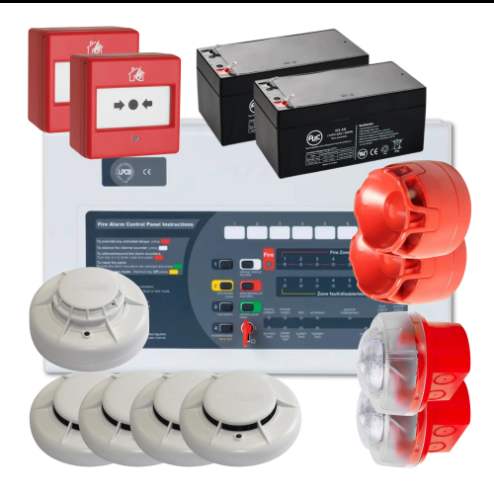
Most commercial shops require a fire alarm system, including:
- Smoke or heat detectors
- Manual call points (break glass units)
- Sounders and visual alarms
- A control panel
Means of Escape
You must provide safe escape routes, including:
- Clear and unobstructed pathways
- Emergency lighting
- Exit signage
- Suitable exit doors
Fire Protection & Fire Doors
Fire protection measures may include:
- Fire-rated walls and ceilings
- Fire doors (typically FD30)
- Fire stopping around pipes and cables
Fire Extinguishers
- Required in most commercial premises
- Type depends on risk (e.g. electrical or kitchen use)
4. How does the process work during a project?
A typical shop fit-out follows these steps:
Step 1 – Design & Planning
- Architect or designer prepares the layout
- Fire safety strategy is considered
- Systems are specified
Step 2 – Fire Risk Assessment
This identifies:
- Fire hazards
- Number of occupants
- Escape requirements
This step determines what systems are needed.
Step 3 – Installation
During construction:
- Fire alarm systems are installed by qualified contractors
- Fire doors and fire protection measures are built in
- All trades are coordinated
Step 4 – Testing & Certification
Before completion:
- Systems are tested and commissioned
- Certificates are issued
- Any issues are resolved
Step 5 – Handover & Operation
After completion:
- Documentation is provided
- Staff are informed of procedures
- Regular testing and maintenance must continue
5. Common challenges (and how we manage them)
From experience, the most common issues are:
Design vs Site Conditions
Older buildings often differ from drawings.
We work closely with designers to resolve discrepancies.
Budget vs Compliance
Some fire safety requirements can increase costs.
We help clients find compliant and cost-effective solutions.
Hidden Works (Very Important)
Fire stopping and internal protection are often overlooked.
These are critical for compliance and are always properly installed.
Changes During Construction
Late changes can affect fire safety compliance.
We always confirm with the design team before proceeding.
6. Why compliance matters
Failure to comply with fire safety requirements can lead to:
- Delays in opening your business
- Issues with Building Control
- Insurance becoming invalid
- Legal penalties
Getting it right from the start saves time, money, and risk.
7. Our approach
As experienced builders, we:
- Work closely with architects and consultants
- Coordinate all trades efficiently
- Ensure all fire-related works are correctly completed
- Help clients understand requirements clearly
Our goal is simple: to deliver a compliant, safe, and practical space without unnecessary cost.
Final Thoughts
Fire safety is not just a regulatory requirement — it is a fundamental part of creating a safe and successful commercial space.
With proper planning and an experienced team, the process can be straightforward and efficient.
Need advice on your project?
If you are planning a shop refurbishment or commercial fit-out, feel free to get in touch. We would be happy to review your plans and guide you through the process.